Pushkin's Italy
Пушкинская Италия
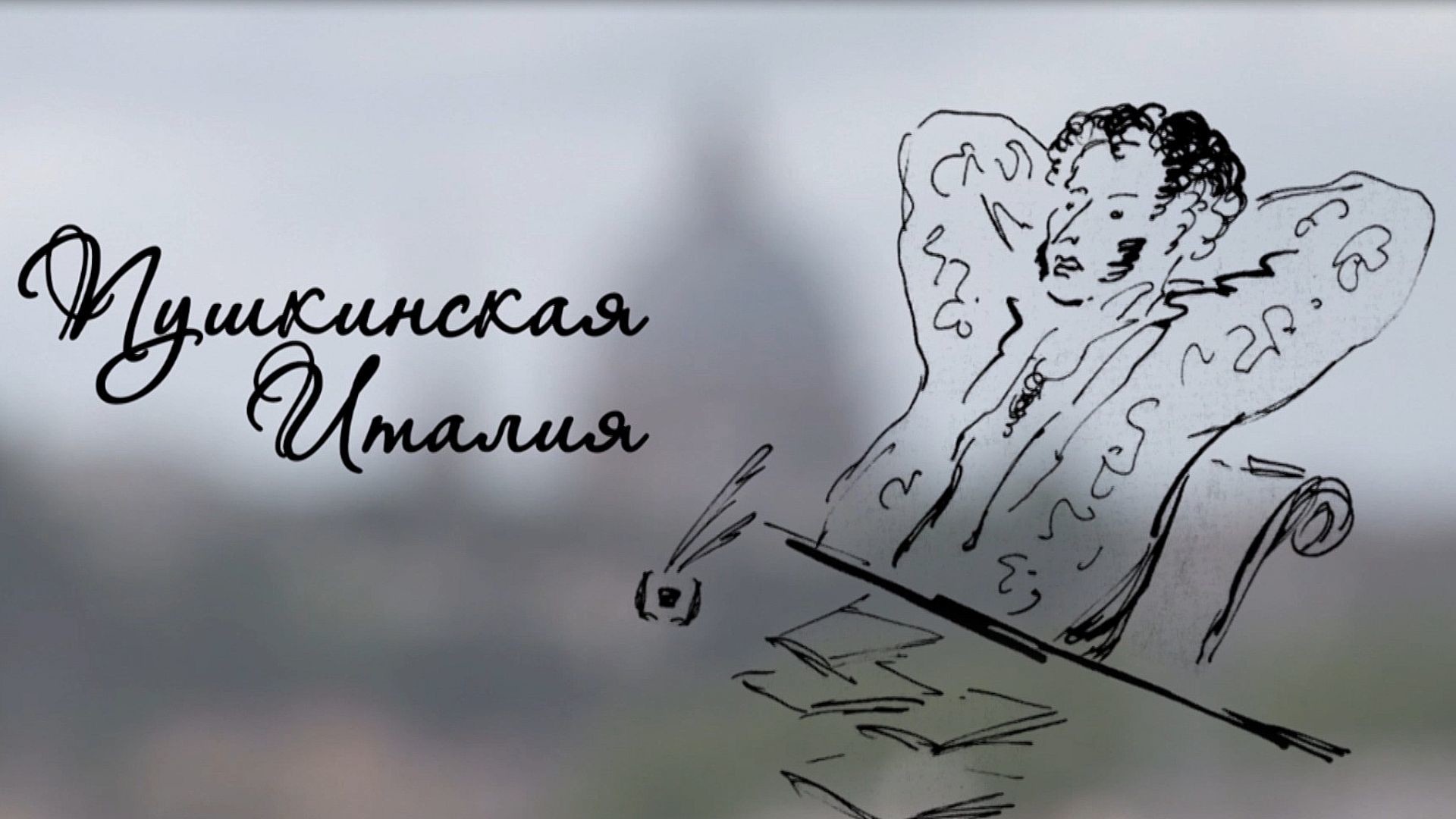
Premiere of the documentary dilogy “Pushkin's Italy” by Galina Yevtushenko. Russia and Italy, in the creative mind of the Russian genius, are two poles, two main semantic points of the film.
The program of the evening includes a meeting with the crew of the film.
Director: Galina Evtushenko
Script writers: Alexey Bukalov, Victor Listov, Galina Evtushenko.
Operators: Cecilia Brunioli, Anatoly Grishko, Victor Dobronitsky.
Composer: Levon Oganezov.
Vocal: Elena Kamburova.
Voice over: Alexey Guskov.
ROZA CINEMA STUDIO Production, 2017.
The program of the evening includes a meeting with the crew of the film.
Director: Galina Evtushenko
Script writers: Alexey Bukalov, Victor Listov, Galina Evtushenko.
Operators: Cecilia Brunioli, Anatoly Grishko, Victor Dobronitsky.
Composer: Levon Oganezov.
Vocal: Elena Kamburova.
Voice over: Alexey Guskov.
ROZA CINEMA STUDIO Production, 2017.
111 min., 0+
Language: Russian
Language: Russian
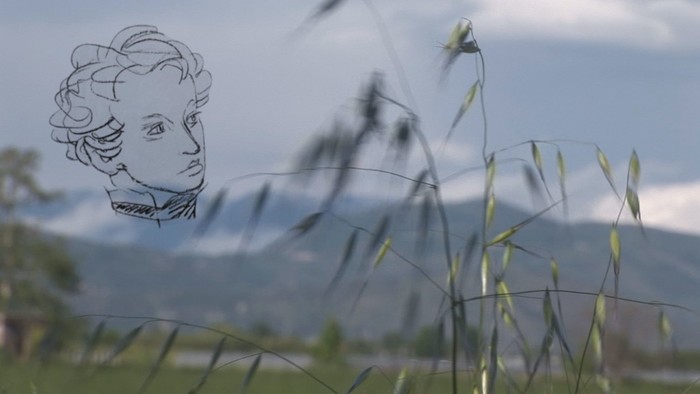


Film 1. To see Brenta!
The first part of a non-fiction dilogy takes us to Rome, Italy, where Pushkin has never been. The authors of the documantary show us those places and monumants of the Eternal City, that Pushkin knew about from books, paintings and the stories travelers. In his youth, the poet called himself "an inexperienced lover of farness" The picture follows Pushkin’s imagination, where Italian realities appearalmost more beautifully than they actually are. Russia and Italy, in the creative mind of the Russian genius, are two poles, two main semantic points of the film. It traces Italian parallels to Eugene Onegin, The Bronze Horseman, Songs of the Western Slavs, and the poet’s lyrical and dramatic experiences. Following their hero, the authors of the film try to distinguish Italian motives in the life of Pushkin and his contemporary compatriots.
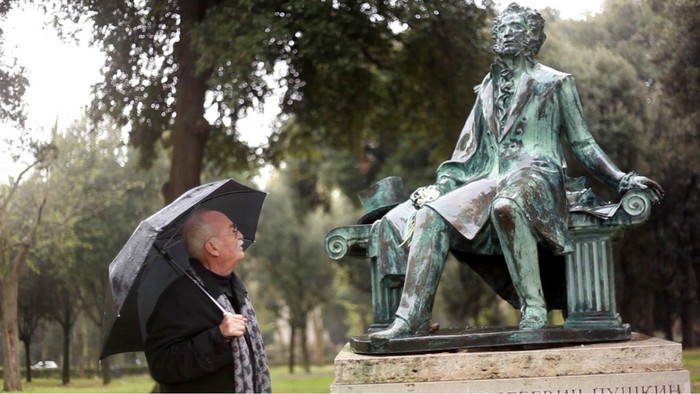


Film 2. Spiritual pilgrim
The second part of non-fiction dilogy. The main motive is a story about Italian addictions of Pushkin. But the emphasis now is placed on those people from the poet’s surroundings who somehow connected him with "Happy Ausonia" with Italy: Gogol, Princess Zinaida Volkonskaya, Karl Bryullov and others. The filmmakers present on the screen the dialogues of two imaginary characters from Pushkin’s circle of acquaintances - Madame and Monsieur. In these dialogs, many reliable details of Pushkin’s times, places, events come to life. The most important episode of the film is based on a newsreel of the early XX century, where a movie camera monitors the visit of Emperor Nicholas II to Italy. On the official trip, the monarch is accompanied not only by his retinue, but also by Italian motifs of Pushkin's works.